
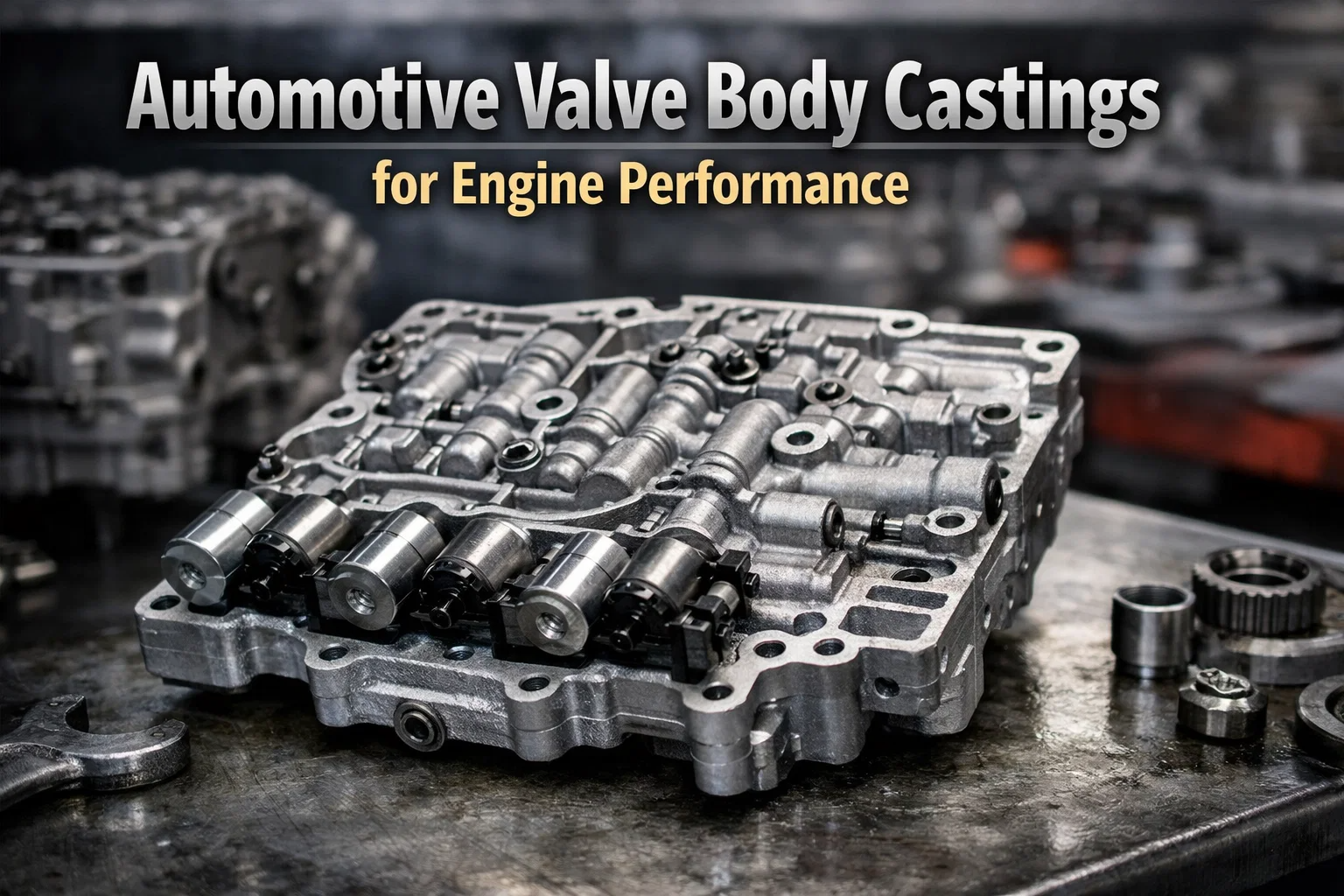
Automotive Valve Body Castings for Engine Performance represent a critical advancement in modern engine design. These castings play a significant role in determining combustion efficiency, power delivery, fuel economy, and overall reliability of internal combustion engines. As demand rises for engines that can deliver better performance and lower emissions, manufacturers are increasingly turning to precision cast components that maximize performance without compromising quality.
The focus of this blog is to provide a thorough and technical overview of Automotive Valve Body Castings for Engine Performance—covering design principles, material considerations, manufacturing techniques, performance impacts, quality standards, and future trends. Whether you are an automotive engineer, manufacturer, student, or enthusiast, you will gain a detailed understanding of why these castings are central to high‑performance engines.
Shubh Mangal Technocast, a leading supplier of high‑precision cast components, specializes in state‑of‑the‑art Automotive Valve Body Castings for Engine Performance designed to meet the rigorous requirements of modern internal combustion systems. Visit our website at https://shubhmangaltechno.com/ to explore our capabilities in cast engineering.
What Are Automotive Valve Body Castings for Engine Performance?
Automotive Valve Body Castings for Engine Performance are cast components that form the structural basis for the valve mechanism in an engine. The valve body is responsible for housing and guiding valves that control the intake of air‑fuel mixture and the exhaust of combustion gases. These castings must withstand high temperatures, cyclic loads, corrosion, and pressure variations, making their design and material properties critical to engine performance.
In essence, these castings connect multiple processes—mechanical motion, fluid dynamics, sealing, and heat management—to ensure the engine operates at peak efficiency. A well‑designed valve body casting optimizes combustion, minimizes frictional losses, and enhances fuel economy.
The manufacturing of Automotive Valve Body Castings for Engine Performance typically involves precision casting methods such as gravity die casting, high‑pressure die casting, or investment casting. The choice of process depends on component complexity, material, dimensional tolerance, surface finish, and performance requirements.
Importance of Precision in Automotive Valve Body Castings for Engine Performance
Precision in Automotive Valve Body Castings for Engine Performance is non‑negotiable. The tolerances in casting directly influence valve seating, timing accuracy, airflow dynamics, and sealing integrity. Even minor dimensional deviations can lead to:
- Reduced combustion efficiency
- Higher emission levels
- Increased wear and tear
- Engine performance degradation
Metallurgical precision ensures consistent microstructure, reducing the risk of pores, inclusions, or stress concentrators that could compromise performance.
Advanced casting technologies like multi‑axis machining, computer‑aided design (CAD), computer simulation of casting flows, and predictive thermal analysis are widely used in the production of these critical components. These technologies help eliminate defects during the design phase, resulting in superior Automotive Valve Body Castings for Engine Performance that perform reliably under demanding conditions.
Material Selection and Its Impact
Material selection for Automotive Valve Body Castings for Engine Performance is based on the need for high strength, excellent thermal properties, wear resistance, and machinability. Common materials include:
1. Aluminum Alloys
Aluminum alloys are favored due to their light weight, high thermal conductivity, and corrosion resistance. These properties improve engine responsiveness and reduce overall vehicle weight—helping fuel efficiency.
2. Cast Iron
Cast iron offers high strength and exceptional wear resistance, making it suitable for heavy‑duty engines. Its damping properties also help reduce vibration, contributing to smoother engine operation.
3. Steel Alloys
Often used in high‑performance or racing engines, steel alloys combine excellent strength with better fatigue resistance. However, these materials are heavier and require more advanced casting techniques.
The choice of material affects not only engine performance but also manufacturing costs, machining complexity, and lifecycle performance. Shubh Mangal Technocast invests in material science research to recommend optimal alloy choices for Automotive Valve Body Castings for Engine Performance across different engine platforms.
Casting Techniques for High‑Performance Valve Bodies
The production of Automotive Valve Body Castings for Engine Performance requires advanced casting processes that ensure robustness and accuracy. Major casting methods include:
1. Die Casting
Die casting involves forcing molten metal into precision machined dies at high pressure. This process yields components with excellent dimensional accuracy, smooth surface finishes, and high repeatability.
2. Investment Casting
Also known as lost‑wax casting, this technique produces complex components with tight tolerances. It is ideal for intricate designs where precision over complex geometries is essential.
3. Sand Casting
Although sand casting is more traditional and less precise than die or investment casting, it remains useful for prototyping and low‑volume production where design flexibility is required.
Each process offers unique advantages in terms of cost, precision, and scalability. Selecting the proper technique is essential to achieving high‑quality Automotive Valve Body Castings for Engine Performance.
Design Considerations for Enhanced Performance
Designing Automotive Valve Body Castings for Engine Performance requires a deep understanding of engine thermodynamics and mechanical stresses. Key design focus areas include:
- Flow optimization: Ensure intake and exhaust channels promote efficient air‑fuel flow with minimal turbulence.
- Wall thickness uniformity: Avoid sharp thickness variations that can lead to thermal stresses.
- Rib integration: Support structural rigidity without adding excessive weight.
- Thermal management: Enable heat dissipation where temperatures peak, especially near combustion ports.
Advanced simulation tools, such as finite element analysis (FEA) and computational fluid dynamics (CFD), allow engineers to test performance virtually before machining any physical prototypes. This level of design accuracy has significantly improved the quality of Automotive Valve Body Castings for Engine Performance in modern engine systems.
Performance Benefits of High‑Quality Automotive Valve Body Castings for Engine Performance
The right Automotive Valve Body Castings for Engine Performance provide a wide range of performance benefits:
1. Improved Combustion Efficiency
Precision valve flow dynamics help engines breathe better, enabling a more complete combustion cycle. Because the air‑fuel mixture enters more uniformly and exhaust gases exit efficiently, the engine can convert more fuel energy into usable power.
2. Higher Power Output
Accurate valve timing and efficient airflow translate directly into higher torque and horsepower. These gains are especially notable in high‑performance and racing engines.
3. Lower Emissions
Optimized combustion reduces unburnt hydrocarbons and nitrogen oxide emissions, helping manufacturers meet stringent emission standards globally.
4. Enhanced Durability
High‑quality cast valve bodies resist thermal fatigue and wear, leading to longer engine life and reduced maintenance costs.
5. Better Fuel Economy
Efficient airflow, reduced friction, and improved thermal management make engines operate more efficiently, lowering fuel consumption for both day‑to‑day driving and high‑load conditions.
Quality Control and Testing Protocols
Quality control is critical when manufacturing Automotive Valve Body Castings for Engine Performance. Rigorous testing ensures that every casting meets industry standards and performs reliably under real‑world stress. Key testing procedures include:
- Dimensional inspection using coordinate measuring machines (CMM)
- Pressure testing to check for internal leaks
- X‑ray or ultrasonic inspection to detect internal defects
- Metallurgical analysis to validate microstructure consistency
- Heat treatment verification to confirm mechanical properties
Shubh Mangal Technocast implements comprehensive inspection protocols, integrating both automated systems and expert craftsmanship to deliver Automotive Valve Body Castings for Engine Performance that exceed customer expectations.
Role in Modern Engine Technologies
Automotive Valve Body Castings for Engine Performance are increasingly vital as engines become more complex. With technologies like variable valve timing (VVT), turbocharging, and direct fuel injection, valve bodies must support dynamic performance variations while maintaining precision.
In hybrid powertrains or performance‑oriented internal combustion systems, these castings enable smoother transitions, improved torque curves, and better responsiveness at different engine speeds.
Real‑World Applications of Automotive Valve Body Castings for Engine Performance
Automotive Valve Body Castings for Engine Performance are found in a wide range of applications across passenger cars, commercial vehicles, performance engines, and motorsport sectors. Let’s explore these.
1. Passenger Vehicles
In everyday passenger vehicles, valve body castings support engines designed for durability, fuel economy, and smooth performance. Precision machining ensures minimal noise, vibration, and harshness (NVH) while maintaining high efficiency across varied driving conditions.
2. Commercial and Heavy‑Duty Engines
Commercial engines, used in trucks, buses, and industrial machines, face extreme loads and long operating hours. Automotive Valve Body Castings for Engine Performance in these applications require enhanced wear resistance, corrosion resistance, and thermal stability.
3. High‑Performance Sports Cars
Sports cars demand peak performance—rapid acceleration, high RPM capabilities, and aggressive torque curves. This places significant pressure on valve body castings to maintain structural integrity under aggressive thermal cycling and mechanical stress.
4. Motorsports and Racing
In motorsports, the margin for performance advantage is narrow. Automotive Valve Body Castings for Engine Performance in racing engines are often custom designed with ultra‑lightweight alloys and precision flow dynamics to optimize power output and throttle response.
Case Study – High‑Performance Castings in Sports Engines
Consider a high‑performance sports engine where even slight improvements in combustion efficiency can translate into measurable gains on the track.
When Automotive Valve Body Castings for Engine Performance were redesigned using advanced CFD simulations to optimize airflow channels, engineers observed:
- 8% improvement in peak torque
- 5% improvement in horsepower across mid‑range RPM
- Reduced fuel consumption during high‑load cycles
These enhancements were achieved without increasing production costs significantly, illustrating how design optimization and precision casting yield tangible performance benefits.
Innovations in Casting Technology
The field of casting technology is rapidly evolving to meet modern engine demands. Recent innovations include:
1. Additive Manufacturing Integration
Hybrid manufacturing combining 3D printing with traditional casting methods allows prototypes and complex geometries to be tested before mass production.
2. Simulation‑Driven Design
Advanced software predicts casting behavior, minimizes defects, and optimizes thermal gradients for Automotive Valve Body Castings for Engine Performance before tooling is created.
3. Automation and Smart Production
Automation in foundries improves repeatability and reduces human error, leading to higher consistency in casting quality.
Environmental Considerations
As global standards push for cleaner emissions and sustainable manufacturing, Automotive Valve Body Castings for Engine Performance also face environmental scrutiny. Manufacturers increasingly adopt:
- Low‑emission melting processes
- Energy‑efficient furnaces
- Recycling of scrap materials
- Reduced use of hazardous oxidizers
Shubh Mangal Technocast incorporates eco‑friendly practices throughout the casting lifecycle, aligning with industry environmental standards.
Overcoming Manufacturing Challenges
Despite technological advancements, challenges in producing Automotive Valve Body Castings for Engine Performance persist. These include:
- Porosity and defects: Uneven solidification can create internal voids.
- Complex geometries: High‑precision features increase tooling complexity.
- Material limitations: Balancing strength and weight remains a core engineering challenge.
Solutions involve:
- Advanced gating and riser design
- Real‑time monitoring of casting cycles
- Rigorous quality control regimes
- Continuous investment in workforce skill enhancements
The Role of Precision Machining
Casting alone does not complete the production of valve bodies. Precision machining ensures that critical surfaces such as valve seats, guide bores, and mounting interfaces meet exact tolerances. Combining high‑performance Automotive Valve Body Castings for Engine Performance with advanced machining results in components capable of supporting demanding engine cycles.
OEM and Tier‑1 Supplier Expectations
Original Equipment Manufacturers (OEMs) and Tier‑1 suppliers demand consistent quality, flexibility in design changes, and reliable delivery timelines. Automotive Valve Body Castings for Engine Performance must meet:
- Stringent dimensional standards
- High repeatability
- Traceability from batch to batch
Suppliers like Shubh Mangal Technocast invest in robust quality management systems, certification compliance, and close collaboration with OEM engineering teams to deliver performance‑oriented castings that integrate seamlessly into modern engine assemblies.
Market Trends and Future Outlook
Several trends are shaping the future of Automotive Valve Body Castings for Engine Performance:
1. Electrification and Hybrid Systems
With partial engine operation in hybrid vehicles, valve bodies must support intermittent performance while contributing to fuel savings.
2. Lightweighting Initiatives
Reducing component weight continues as a priority to improve performance and reduce emissions.
3. Smart Materials
Materials with embedded sensors capable of health monitoring are being explored for next‑generation engines.
Global Industry Standards
Manufacturers adhere to international standards for Automotive Valve Body Castings for Engine Performance, such as ISO/TS certifications, automotive supplier quality standards, and environmental safety mandates.
Compliance with these standards ensures that castings are produced to meet universal performance, safety, and sustainability benchmarks.
Customer Success Stories
Case Example – Commercial Vehicle Supplier
A major commercial vehicle manufacturer engaged Shubh Mangal Technocast for a series of Automotive Valve Body Castings for Engine Performance. Through collaborative design, material optimization, and precise manufacturing, the customer realized:
- 12% improvement in fuel economy
- 15% extension in engine maintenance intervals
- Reduction in warranty claims related to valve body failures
This success underscores the impact of high‑quality cast components in demanding real‑world applications.
Tips for Choosing the Right Casting Partner
When selecting a supplier for Automotive Valve Body Castings for Engine Performance, consider:
- Technical expertise and material capabilities
- Range of casting processes available
- Quality assurance certifications
- Engineering support and design collaboration
- On‑time delivery history
Shubh Mangal Technocast exemplifies these qualities, supporting clients from design to production and helping them achieve strategic performance goals.