
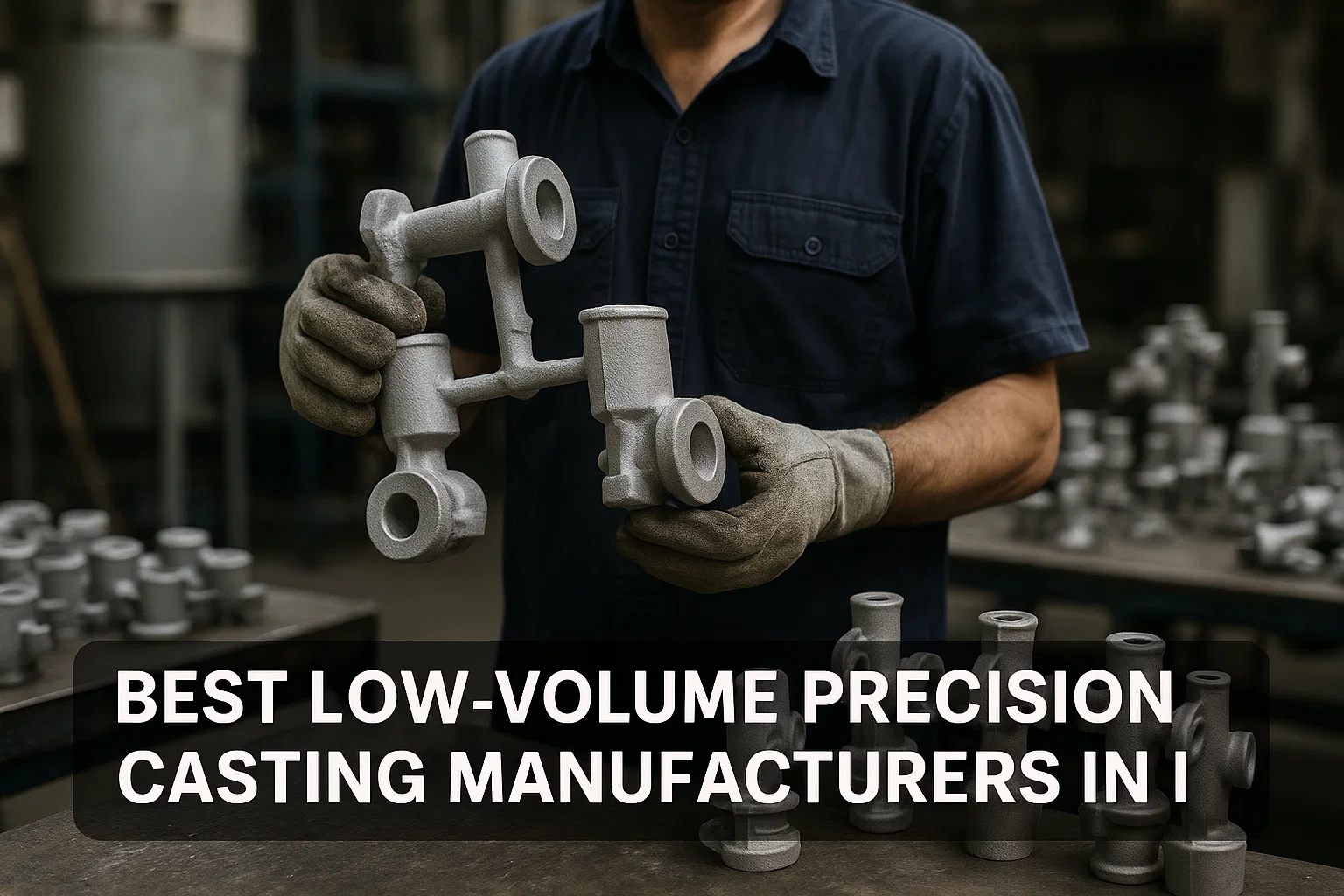
Why Low-Volume Precision Casting Is Transforming India’s Manufacturing Future
India’s manufacturing industry is rapidly evolving, fueled by growing demand for high-performance, complex, and durable components across sectors like automotive, aerospace, pumps, oil & gas, medical equipment, defense, and general engineering. Among all modern metal-forming methods, low-volume precision casting has emerged as one of the most valuable production techniques for companies that require limited quantities of highly accurate metal parts. As a result, businesses searching for the best low-volume precision casting manufacturers in India want partners who can deliver accuracy, consistency, and flexibility without compromising performance.
Low-volume precision casting is ideal for companies that need prototype development, trial batches, custom parts, and engineering-grade components but do not want to invest in expensive tooling or large-scale production. This method gives manufacturers the ability to create highly detailed shapes with tight tolerances, excellent surface finish, and superior metallurgical integrity.
In India, a handful of manufacturers have mastered this technique, but among them, Shubh Mangal Technocast stands out as a trusted industry leader. You can learn more about the company here.
Understanding Low-Volume Precision Casting
Before exploring why India has become a preferred global destination for this technology, it is important to understand what low-volume precision casting means. This casting technique uses expendable wax patterns, ceramic shell coating, controlled melting, and precision pouring to create components with high accuracy and dimensional perfection.
Unlike high-volume industrial casting, low-volume precision casting focuses on small batch production—typically ranging from a few pieces to a few thousand pieces. Manufacturers prefer it because:
- It avoids costly tooling
- It supports complex and custom geometries
- It ensures exceptional surface finish
- It offers mechanical properties close to forged components
- It reduces machining requirements
- It speeds up prototype development
Because modern industries demand flexibility, custom engineering, and trial production, the search for high-quality low-volume precision casting vendors in India continues to rise.
Why India Has Become a Global Hub for Low-Volume Precision Casting
India has a long history in metallurgy and casting, but in the last decade, engineering cities like Rajkot, Pune, Coimbatore, Jamnagar, and Ahmedabad have invested heavily in advanced casting technologies. This includes automated shell building, digital metallurgy tools, advanced furnaces, CNC machining, and improved quality-control labs.
These improvements have allowed India to become a reliable sourcing destination for companies around the world searching for the best low-volume precision casting manufacturers in India.
Key reasons India is a preferred global manufacturing location:
Skilled metallurgical workforce
India has a strong engineering foundation, and cities like Rajkot are home to highly trained professionals specializing in wax pattern design, shell building, alloy selection, and precision machining.
Cost-effective production
Compared to Europe, USA, or Japan, India offers significantly lower production costs without compromising on quality—making it a highly attractive option for global buyers.
Ability to handle complex geometries
Indian manufacturers excel in precision craftsmanship, allowing them to produce intricate shapes, internal passages, undercuts, and thin-walled parts with high dimensional accuracy.
Strong supply chain
The availability of raw materials, CNC machining centers, testing facilities, and transport networks makes India an ideal production hub for low-volume precision casting.
Consistent Quality Standards
Many Indian companies follow international standards such as ISO, ASTM, DIN, and JIS.
These strengths have made India a trusted partner for global industries requiring low-volume precision casting solutions.
Why Low-Volume Precision Casting Matters Today
Modern manufacturing has changed drastically. Earlier, companies focused heavily on mass production. Today, innovation, prototyping, customization, and design validation are the priorities. Industries need parts in limited quantities before finalizing large-scale manufacturing.
Here’s why low-volume precision casting is critical:
Ideal for R&D and new product development
Companies launching new products must test parts in real-world conditions. Low-volume precision casting makes it easy to create trial parts.
Fast turnaround
With digital modeling and quick wax pattern creation, manufacturers can deliver parts much faster than traditional casting or machining.
Complex shapes
Precision casting allows the creation of intricate shapes that are impossible or expensive to achieve with machining.
Reduces cost
Low-volume precision casting eliminates the need for expensive dies and molds used in high-volume processes.
Excellent material properties
The microstructure achieved through investment casting is superior to many conventional casting methods.
These advantages explain why so many businesses today search for the best low-volume precision casting manufacturers in India to support prototypes, trial batches, and special alloy components.
Shubh Mangal Technocast – A Trusted Leader in Low-Volume Precision Casting
Among the companies shaping India’s casting industry, Shubh Mangal Technocast stands out as a reliable, quality-focused, and innovation-driven manufacturer. Known for its engineering expertise, advanced equipment, and strong focus on precision, the company has earned its position among the best low-volume precision casting manufacturers in India.
Visit their official website here:
https://shubhmangaltechno.com/
What sets Shubh Mangal Technocast apart?
Advanced Manufacturing Setup
The company uses automated wax injection systems, ceramic shell-building equipment, vacuum melting furnaces, and controlled atmosphere casting machines to produce high-precision parts.
Expertise in Low-Volume Projects
Many companies struggle with small-batch production due to the time, cost, and manpower required. But Shubh Mangal Technocast specializes in low-volume precision casting, making it a preferred partner for startups, R&D teams, and OEMs.
Custom Alloy Capabilities
They work with stainless steel, carbon steel, alloy steel, super alloys, duplex steel, and more—making them suitable for complex industrial applications.
International Quality Standards
Every component undergoes rigorous testing including:
- Spectro analysis
- Microstructure inspection
- Hardness testing
- NDT testing (MPI, DPI, Radiography)
- Dimensional inspection
Fast Delivery & Tight Tolerance Control
Whether a company needs 10 pieces or 500 pieces, Shubh Mangal Technocast ensures precision, consistent finishing, and on-time delivery.
Industries Using Low-Volume Precision Casting
This technology is widely used across industries requiring highly accurate and durable metal parts.
Here are the major sectors benefiting from low-volume precision casting:
Automotive Components
Used for engine parts, turbo housings, brackets, transmission components, and lightweight structural elements.
Industrial Machinery & Pumps
Precision casting helps produce pump impellers, valves, fittings, and compressor parts with perfect geometry.
Oil & Gas
Corrosion-resistant alloys are cast into complex shapes suitable for valves, drilling components, and flow control systems.
Defense Equipment
Defense-grade alloys require extreme accuracy and reliability—something low-volume precision casting delivers perfectly.
Aerospace
Aircraft components demand lightweight, complex, heat-resistant shapes, making precision casting a preferred choice.
Medical & Surgical Tools
Stainless-steel surgical tools and components are ideally manufactured through precision casting.
Marine Industry
Saltwater-resistant components rely heavily on high-grade alloy castings.
These industries increasingly depend on the best low-volume precision casting manufacturers in India for critical components.
The Precision Advantage – Why Companies Prefer This Process
Low-volume precision casting offers several advantages over traditional casting, forging, and machining:
Tight tolerances achievable
Precision casting delivers dimensional accuracy up to ±0.1 mm depending on the size and geometry.
Reduced machining
Because castings come out smooth and near-net shape, secondary machining is minimized.
Fine surface finish
The wax pattern and ceramic mold provide a mirror-like finish.
Allows complex shapes
Holes, cavities, curves, and internal shapes are possible without machining.
Ideal for special alloys
Super alloys and high-alloy steels shape well through precision casting.
These benefits make low-volume precision casting the top choice for high-performance industries.
Comparing Low-Volume Precision Casting With Other Metal Forming Methods
Precision Casting vs. Sand Casting
- Precision casting offers much tighter tolerances
- Better surface finish
- More suitable for complex parts
- Lower machining requirements
- Higher strength
Precision Casting vs. Die Casting
- Die casting requires expensive molds
- Not suitable for small batches
- Precision casting is better for specialized alloys
- Ideal for low-volume production
Precision Casting vs. CNC Machining
- Machining wastes material
- Complex shapes are difficult
- Casting reduces material cost and machining time
Because of these benefits, many industries now prefer low-volume precision casting for prototypes, specialized components, and engineering development.
Why Shubh Mangal Technocast is Among the Best Low-Volume Precision Casting Manufacturers in India
Here are strong reasons why the company is trusted across multiple industries:
Precision manufacturing systems
Expertise in handling small-batch orders
Experienced engineers and metallurgists
Advanced quality-control labs
Strong customer support
Ability to cast complex shapes
Consistent tolerances and dimensional accuracy
Proven track record in industrial and export markets
Their combination of technology, expertise, and engineering knowledge places them among the best low-volume precision casting manufacturers in India.
Why Low-Volume Precision Casting is the Future of Indian Manufacturing
The growth of R&D, prototyping, and custom engineering has led manufacturers to shift from traditional mass-production strategies to more flexible and innovative methods. Low-volume precision casting allows companies to build new designs, test engineering concepts, and produce customized metal components in small batches. This is why India’s leading industries frequently search for manufacturers who specialize in this advanced casting technique.
Let’s explore the deeper reasons why the technique is in such high demand:
1. Ideal for Prototype Development
Today’s product development cycles are rapid, and companies cannot afford long manufacturing delays. Low-volume precision casting helps industries develop prototypes that closely resemble final production parts. Engineers can evaluate:
- Surface finish
- Dimensional accuracy
- Strength and durability
- Thermal performance
- Fit and functionality
Prototypes made through low-volume precision casting provide realistic data, enabling quick design modifications and faster product launches.
2. Perfect for Custom & Specialized Components
Many industries require unique metal components that cannot be mass-produced. For example:
- Custom valve bodies
- Special automotive brackets
- Precision impellers
- Defense-grade components
- Medical-grade stainless steel tools
- Aerospace connectors
Because each of these components demands strict tolerance control and high structural reliability, low-volume precision casting becomes the preferred manufacturing process.
3. Significantly Lower Tooling Cost
High-volume processes like die casting require expensive molds that are not cost-effective for sample batches or prototype development. Precision casting, however, offers:
- Lower tooling costs
- Reusable molds for modifications
- Ability to make quick design changes
- Ideal for initial production runs
These benefits make low-volume precision casting a cost-effective solution for startups, OEMs, and research-based industries.
4. Capacity to Work with High-Performance Alloys
Many high-strength alloys—such as duplex steel, super alloys, cobalt alloys, and heat-resistant steels—perform exceptionally well when produced using precision casting.
This becomes valuable for demanding industries like aerospace, defense, marine, and petrochemical engineering, where reliability is non-negotiable.
Step-by-Step Workflow of Low-Volume Precision Casting
Understanding the full casting workflow highlights the complexity, craftsmanship, and technical expertise required.
Each step requires precision—which explains why companies prefer only the best low-volume precision casting manufacturers in India.
Wax Pattern Creation
The casting process begins with a wax model that replicates the exact geometry of the final metal part. This wax pattern must be:
- Perfectly smooth
- Dimensional accurate
- Defect-free
- Stable under shell-building conditions
Any error in the wax pattern will reflect in the final casting, demanding meticulous attention.
Assembly & Gating System
Multiple wax patterns are often assembled onto a central wax sprue. Proper gating design ensures:
- Optimal metal flow
- Reduced turbulence
- Minimal porosity
- Controlled cooling
This step is essential for achieving defect-free low-volume precision casting results.
Ceramic Shell Coating
Each wax assembly is dipped multiple times into ceramic slurry and coated with refractory sand. This creates a hard ceramic shell that withstands molten metal temperatures.
The strength and consistency of the ceramic shell determine:
- Surface finish
- Dimensional accuracy
- Internal integrity
- Ability to handle high-melting alloys
Wax Removal (Dewaxing)
The ceramic-coated wax assembly is put into a high-temperature autoclave where wax melts and drains out. This leaves behind a hollow ceramic mold ready for metal pouring.
Precision at this stage makes low-volume precision casting accurate and reliable.
Metal Melting & Pouring
Depending on alloy requirements, melting is done in:
- Induction furnaces
- Vacuum furnaces
- Electric arc furnaces
At Shubh Mangal Technocast, melting is controlled through advanced digital systems ensuring:
- Accurate chemical composition
- Controlled temperature
- Slag removal
- Smooth metal flow
This stage is crucial for metallurgical quality.
Shell Breakdown & Part Removal
After cooling, the ceramic shell is broken to reveal the metal casting. Each component undergoes:
- Shot blasting
- Grinding
- Sand removal
- Gate cutting
This step transforms the raw casting into a near-net shape component.
Heat Treatment & Stress Relief
Heat treatment improves:
- Hardness
- Strength
- Corrosion resistance
- Grain structure
Different industries require specific mechanical properties, making heat treatment a vital stage in low-volume precision casting.
Final Machining
CNC machining provides perfect dimensional accuracy when needed. Components requiring threads, slots, or tight-fitting features undergo secondary machining.
Final Inspection & Quality Testing
This is where the precision truly matters. Quality testing includes:
- Hardness testing
- Microstructure analysis
- Chemical composition test
- Dimension measurement
- Surface inspection
- NDT tests (MPI, LPI, RT)
These tests confirm that every component meets the expected engineering and industrial standards.
Why Shubh Mangal Technocast Leads Low-Volume Precision Casting in India
Now let’s dive into why Shubh Mangal Technocast is recognized as one of the best low-volume precision casting manufacturers in India.
Official website:
https://shubhmangaltechno.com/
1. Engineering Precision
The company invests heavily in modern casting technologies such as:
- Digital temperature control systems
- Automated shell-building equipment
- 3D modeling and simulation
- Vacuum melting technology
- Robotic pouring systems
Their advanced tools ensure every low-volume precision casting meets strict engineering standards.
2. Expertise in Handling Complex Shapes
Industries often require thin-walled, lightweight, or internally complex designs.
Shubh Mangal Technocast specializes in producing:
- Hollow impellers
- Turbine blades
- Valve components
- Automotive housings
- Aerospace connectors
Complex geometry is where precision casting becomes most valuable—and the company excels in this domain.
3. Superior Alloy Capability
They cast a wide range of materials including:
- Stainless steel (SS304, SS316, SS410, etc.)
- Carbon steel
- Alloy steel
- Duplex and Super Duplex
- Nickel-based alloys
- Heat-resistant alloys
This makes them a top choice for industries requiring advanced low-volume precision casting performance.
4.International Quality Compliance
The company follows:
- ISO quality systems
- ASTM standards
- Dimensional tolerances as per global norms
- Material certifications
- Third-party inspection compliance
This is why global brands rely on Shubh Mangal Technocast for critical components.
5. Short Lead Times
Low-volume orders require fast turnaround.
Shubh Mangal Technocast ensures:
- Quick mold preparation
- Fast wax creation
- Efficient shell-building cycles
- Timely machining
- On-schedule delivery
Their systems are optimized for small-batch and prototype needs.
Global Export Strength
Indian manufacturers today supply castings to the USA, Europe, UAE, Australia, Southeast Asia, and Africa.
Shubh Mangal Technocast’s export-ready quality makes it one of the best low-volume precision casting manufacturers in India.
Export buyers prefer the company because of:
- High precision
- Superior finishing
- Strong packaging
- Competitive pricing
- Custom alloy development
- Fast dispatch systems
Their reliability makes them a preferred long-term partner.
Industries Trusting Shubh Mangal Technocast
Here’s a list of industries where their castings are widely used:
Automotive
Industrial machinery
Oil & gas
Aerospace engineering
Defense
Medical devices
Marine equipment
Construction
Railway systems
These industries rely heavily on low-volume precision casting for high-performance results.
How Low-Volume Precision Casting Supports Innovation
Every industry today wants innovation, and precision casting plays a big role in:
- Lightweight design development
- High-strength part creation
- New alloy experimentation
- Product testing
- Design validation
- Market-ready prototype manufacturing
This makes low-volume precision casting essential for the future of engineering.
Future of Low-Volume Precision Casting in India
India’s manufacturing ecosystem is growing at unprecedented speed.
Here’s what the future holds:
Wider use of automation
Integration of 3D printing in wax pattern creation
Advanced alloys for defense and aerospace
Growth in medical and renewable-energy components
Enhanced simulation-based casting
Greater export demand
Companies capable of delivering accurate low-volume precision casting will lead the next generation of engineering.
Why Shubh Mangal Technocast Stands Out
After exploring the entire spectrum of precision casting, it becomes clear why Shubh Mangal Technocast is considered one of the best low-volume precision casting manufacturers in India.
They provide:
- High dimensional accuracy
- Complex design capability
- Multi-alloy expertise
- Strong quality assurance
- Low-volume flexibility
- Fast execution
- Consistent performance
For businesses seeking precision, reliability, and technical excellence,
Shubh Mangal Technocast is a trusted partner.