
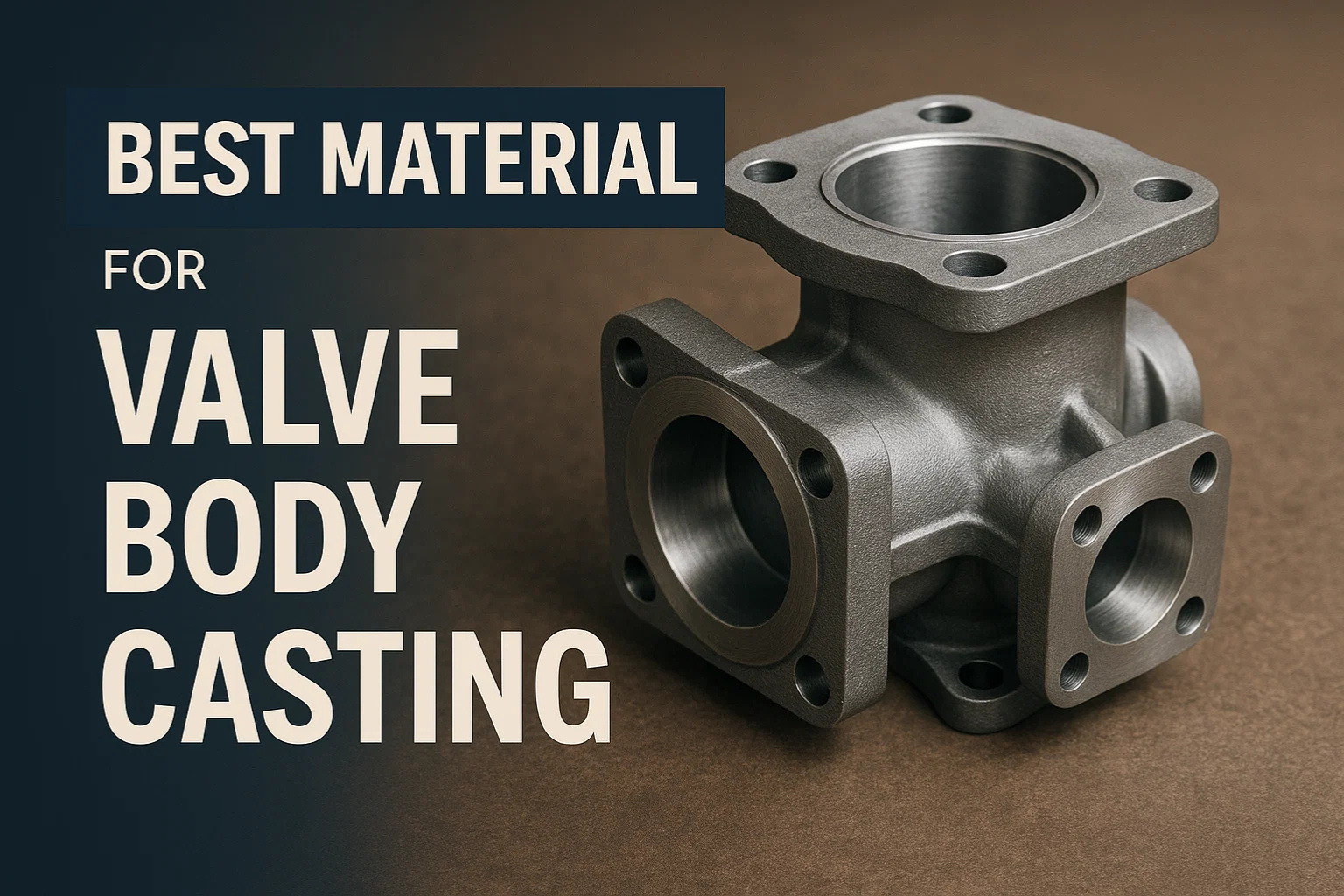
Best Material for Valve Body Casting | Shubh Mangal Techno
Valves are critical components in industrial systems — controlling the flow of liquids, gases, and chemicals in various sectors like oil refineries, power plants, and water treatment facilities. The best material for valve body casting determines how effectively a valve performs under high pressure, extreme temperatures, and corrosive environments. At Shubh Mangal Techno, we specialize in advanced casting techniques to produce durable, high-performance valve bodies using the most reliable materials available in the industry.
Understanding Valve Body Casting
Valve body casting is the process of forming the main structural component of a valve by pouring molten metal into a mold. This mold defines the precise shape and thickness of the valve body, which houses internal components such as seats, discs, and stems. The valve body must endure high-pressure fluids, harsh chemicals, and constant operational stress — making material selection one of the most critical decisions in the manufacturing process.
Selecting the best material for valve body casting ensures that valves deliver long-term reliability, safety, and efficiency even in the toughest industrial conditions.
Key Factors in Selecting the Best Material for Valve Body Casting
- Operating Temperature and Pressure:
The chosen material must maintain structural integrity and dimensional stability under both extreme heat and cold, without cracking or deforming. - Corrosion Resistance:
Valves used in chemical, oil, and marine industries require corrosion-resistant materials such as stainless steel, bronze, or duplex steel. - Mechanical Strength:
The valve body must withstand constant vibration, impact, and flow-induced stress, especially in heavy-duty industrial operations. - Cost and Availability:
The best material for valve body casting must offer an ideal balance between performance, machinability, and affordability. - Type of Fluid:
The chemical nature of the fluid—acidic, alkaline, or neutral—significantly affects material choice.
Best Materials for Valve Body Casting
Below are the most widely used and industry-approved materials for valve body casting across different applications:
1. Cast Iron (CI)
Applications: Water, steam, and low-pressure systems
Cast iron remains a popular choice for valve body casting due to its low cost and ease of machining. However, it’s best suited for non-corrosive and low-pressure environments.
Advantages:
- Cost-effective and easily available
- Excellent vibration absorption
- Good machinability
Limitations:
- Brittle nature
- Not suitable for high pressure or corrosive conditions
2. Ductile Iron (SG Iron)
Applications: Water distribution, sewage, and general-purpose systems
Ductile iron provides superior flexibility and strength compared to cast iron, making it one of the best materials for valve body casting in low-pressure industrial systems.
Advantages:
- Higher strength and elongation
- Better impact resistance
- Moderate corrosion resistance
Limitations:
- Limited high-temperature tolerance
3. Carbon Steel
Applications: Oil & gas, steam, and petrochemical industries
Carbon steel is one of the best materials for valve body casting where high pressure and temperature are involved. It delivers excellent mechanical strength and durability.
Advantages:
- High tensile and yield strength
- Performs well at elevated temperatures
- Cost-effective for industrial applications
Limitations:
- Requires coatings for corrosion protection
- Moderate resistance to chemicals
4. Stainless Steel (SS)
Applications: Food processing, pharmaceuticals, and chemical industries
Stainless steel is considered the best material for valve body casting when corrosion resistance and hygiene are top priorities. It handles aggressive chemicals and saline environments effectively.
Advantages:
- Outstanding corrosion resistance
- High strength and durability
- Easy to clean and maintain
Limitations:
- Higher production cost
- More difficult to machine
5. Bronze
Applications: Marine and desalination systems
Bronze is an excellent material for valve body casting in marine applications due to its superior resistance to seawater corrosion.
Advantages:
- Exceptional resistance to saltwater and chemicals
- Excellent thermal conductivity
- Long service life
Limitations:
- More expensive than iron-based materials
- Not suited for high-pressure environments
6. Alloy Steel
Applications: High-pressure, high-temperature environments
Alloy steel combines multiple metals to improve mechanical properties, making it a preferred choice in power and petrochemical plants.
Advantages:
- Excellent heat and wear resistance
- High strength-to-weight ratio
- Customizable alloy composition
Limitations:
- Higher cost
- Requires specialized casting and heat treatment
7. Duplex and Super Duplex Stainless Steel
Applications: Offshore oil rigs, desalination units, and chemical processing plants
Duplex steels are among the best materials for valve body casting when extreme corrosion resistance and strength are required.
Advantages:
- Double the strength of standard stainless steel
- Excellent resistance to chloride-induced corrosion
- Long lifespan in harsh environments
Limitations:
- High cost
- Requires precise casting control
8. Nickel-Based Alloys (Inconel, Hastelloy)
Applications: Aerospace, nuclear, and chemical industries
For extreme heat and corrosive environments, nickel-based alloys are the best material for valve body casting due to their exceptional stability.
Advantages:
- Unmatched corrosion and heat resistance
- Long operational lifespan
- Withstands aggressive chemicals
Limitations:
- Very expensive
- Complex to cast and machine
Material Selection by Industry
| Industry | Recommended Materials | Key Benefits |
|---|---|---|
| Water Treatment | Ductile Iron, Stainless Steel | Corrosion and rust resistance |
| Oil & Gas | Carbon Steel, Alloy Steel | High pressure and temperature tolerance |
| Chemical | Stainless Steel, Nickel Alloy | Acid and alkali resistance |
| Marine | Bronze, Duplex Steel | Excellent saltwater resistance |
| Power Generation | Alloy Steel, Inconel | Heat and stress durability |
| Food Processing | SS304, SS316 | Hygienic and corrosion-proof |
Shubh Mangal Techno’s Expertise in Valve Body Casting
At Shubh Mangal Techno, we understand that selecting the best material for valve body casting is not just about strength — it’s about performance, cost, and longevity. Our expert engineers evaluate each project’s operating conditions, temperature, and pressure requirements before recommending the ideal alloy or metal.
We offer:
- Custom alloy compositions
- Investment and sand casting options
- CNC machining and surface finishing
- Strict quality control and NDT inspection
Quality Assurance in Valve Body Casting
Every valve body produced at Shubh Mangal Techno undergoes rigorous testing to ensure it meets international quality standards. Our testing methods include:
- Radiographic Testing (RT) – Detects internal flaws
- Ultrasonic Testing (UT) – Measures thickness and integrity
- Magnetic Particle Inspection (MPI) – Checks for surface cracks
- Pressure & Leak Testing – Ensures performance reliability
This ensures that every casting is defect-free and ready for real-world industrial applications.
Why Choose Shubh Mangal Techno?
- Comprehensive Material Expertise: From cast iron to nickel alloys, we provide all major material options.
- Precision Casting Technology: Advanced techniques for complex valve geometries.
- Fast Turnaround: Optimized production timelines with reliable delivery.
- Custom Design Support: Tailored engineering for unique industrial requirements.
- 24/7 Customer Support: Connect via Instagram, WhatsApp, or Facebook for project updates and inquiries.
The Future of Valve Body Casting Materials
The future of valve body casting materials lies in developing lighter, stronger, and more sustainable alloys. Emerging trends include:
- Titanium-based Alloys: For lightweight yet corrosion-proof performance.
- Ceramic and Composite Coatings: To enhance wear and chemical resistance.
- Smart Materials: Offering self-healing and adaptive thermal properties.
At Shubh Mangal Techno, we continuously innovate and adopt modern metallurgical advancements to ensure that our valve castings remain at the forefront of industrial performance.