Heat-Resistant & Complex Geometry Castings for Modern Industrial Equipment
Heat-Resistant & Complex Geometry Castings are critical components in modern industrial equipment where extreme temperatures, pressure variations, and intricate design requirements must be handled with precision. As industries such as power generation, automotive, oil & gas, pumps, valves, and heavy engineering continue to evolve, the demand for Heat-Resistant Industrial Castings has increased significantly.
Modern industrial machinery relies on components that can withstand thermal stress while maintaining dimensional accuracy. This is where Heat-Resistant Industrial Castings play a vital role by delivering durability, performance, and reliability in harsh operating environments.
Manufacturers like Shubh Mangal Technocast specialize in producing precision-engineered castings that meet the demanding needs of modern industries. Learn more about their advanced casting solutions at Shubh Mangal Technocast.
Understanding Heat-Resistant & Complex Geometry Castings
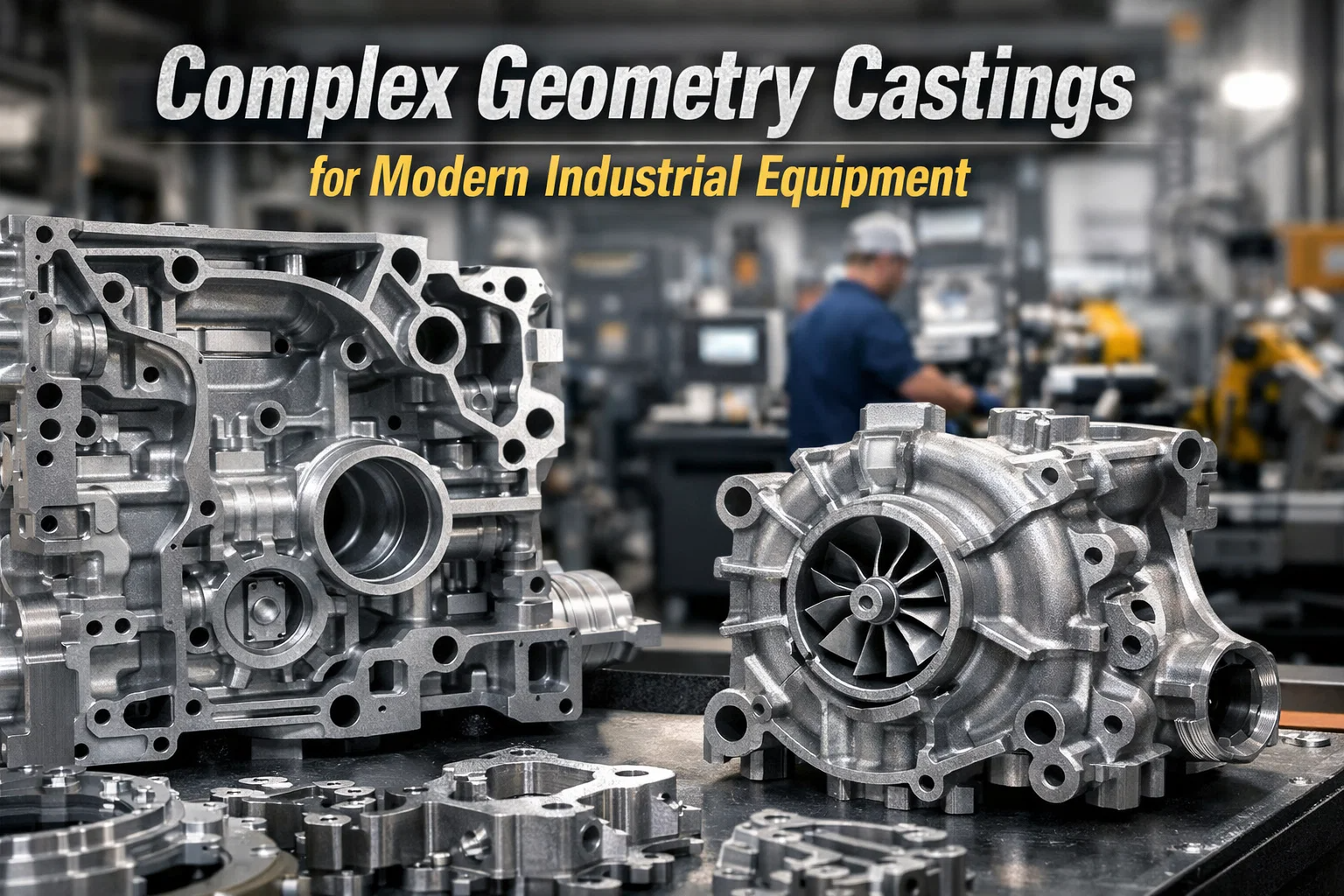
Heat-Resistant & Complex Geometry Castings refer to precision cast components designed with intricate shapes and internal structures while maintaining high resistance to extreme temperatures. These castings are engineered to perform under continuous thermal loads without deformation, cracking, or material failure.
Key characteristics include:
- Intricate internal channels and thin walls
- Tight dimensional tolerances
- High resistance to oxidation and thermal fatigue
- Structural integrity at elevated temperatures
These features make Heat-Resistant Industrial Castings essential for modern industrial equipment operating in demanding environments.
Why Complex Geometry Matters in Industrial Equipment
Modern industrial equipment is becoming more compact, efficient, and performance-driven. As a result, components now require:
- Reduced weight with higher strength
- Integrated functions within a single component
- Optimized flow paths for gases and fluids
- Precise alignment with mating components
Heat-Resistant Industrial Castings enable manufacturers to produce parts that combine multiple functions into one casting, reducing assembly time, improving reliability, and lowering overall system costs.
Importance of Heat Resistance in Industrial Castings
Heat resistance is a crucial factor for components exposed to continuous or cyclic high temperatures. Heat-Resistant Industrial Castings are specifically designed to:
- Resist thermal expansion and contraction
- Prevent oxidation and scaling at high temperatures
- Maintain mechanical strength under thermal stress
- Withstand thermal shock and fatigue
These properties are especially important in applications such as furnaces, turbines, exhaust systems, valves, and high-pressure pumps.
Materials Used in Heat-Resistant & Complex Geometry Castings
Selecting the right material is essential for producing reliable Heat-Resistant Industrial Castings. Common materials include:
Stainless Steel Alloys
- Excellent corrosion and oxidation resistance
- High strength at elevated temperatures
- Suitable for valves, pumps, and chemical processing equipment
Alloy Steels
- Enhanced thermal fatigue resistance
- Used in power generation and heavy machinery
- Ideal for components exposed to fluctuating temperatures
Nickel-Based Alloys
- Superior heat resistance
- Maintain strength under extreme thermal conditions
- Commonly used in turbines and aerospace-related equipment
Heat-Resistant Cast Iron
- Good thermal stability
- Cost-effective for certain industrial applications
Manufacturers like Shubh Mangal Technocast ensure strict material traceability and quality control for all Heat-Resistant Industrial Castings.
Manufacturing Processes for Complex Geometry Castings
Investment Casting (Lost Wax Casting)
Heat-Resistant Industrial Castings is one of the most preferred methods for producing Heat-Resistant Industrial Castings. This process allows:
- Accurate replication of complex shapes
- Smooth surface finishes
- Tight tolerances without excessive machining
Sand Casting
Used for larger components where extremely fine tolerances are not required. Sand casting is cost-effective and suitable for heat-resistant materials.
Shell Molding
Provides better surface finish and dimensional accuracy compared to traditional sand casting.
Among these methods, investment casting remains the best choice for intricate Heat-Resistant Industrial Castings used in high-performance industrial equipment.
Design Considerations for Complex Geometry Castings
Designing Heat-Resistant Industrial Castings requires advanced engineering expertise. Important design considerations include:
- Uniform wall thickness to avoid thermal stress
- Proper fillets and radii to reduce stress concentration
- Optimized gating and riser design
- Allowance for thermal expansion
Modern CAD and simulation software help predict defects and optimize designs before actual production begins.
Applications of Heat-Resistant & Complex Geometry Castings
Heat-Resistant Industrial Castings are widely used across industries, including:
Power Generation
- Turbine components
- Heat exchangers
- Boiler parts
Oil & Gas Industry
- Valve bodies
- Pump components
- High-pressure fittings
Automotive Industry
- Exhaust manifolds
- Turbocharger housings
- Engine components
Industrial Machinery
- Furnace parts
- Heavy-duty valve systems
- Chemical processing equipment
Industry research published by ASM International highlights the importance of advanced materials and casting techniques for high-temperature industrial applications.
Quality Assurance in Heat-Resistant & Complex Geometry Castings
High-quality Heat-Resistant Industrial Castings require rigorous inspection and testing:
- Chemical composition analysis
- Mechanical property testing
- Non-destructive testing (radiography, ultrasonic testing)
- Dimensional inspection using CMM
- Thermal performance testing
These measures ensure long-term reliability and consistent performance in industrial environments.
Benefits of Heat-Resistant & Complex Geometry Castings
- Improved equipment efficiency
- Reduced maintenance and downtime
- Enhanced component lifespan
- Ability to operate under extreme conditions
- Greater design flexibility
By using Heat-Resistant & Complex Geometry Castings, manufacturers can achieve higher performance with fewer components and reduced system complexity.
Role of Precision Casting in Modern Equipment Design
Precision casting allows engineers to design innovative industrial equipment without compromising strength or durability. Heat-Resistant & Complex Geometry Castings support:
- Lightweight yet strong designs
- Compact machinery layouts
- Improved thermal management
- Integration of multiple features into a single part
This makes precision casting a strategic advantage for modern industrial manufacturing.
Global Standards for Heat-Resistant & Complex Geometry Castings
Reputable manufacturers follow international standards such as:
- ASTM standards for material properties
- ISO 9001 for quality management
- ISO 14001 for environmental compliance
- Industry-specific specifications for heat resistance
Compliance with these standards ensures consistent quality in Heat-Resistant & Complex Geometry Castings.
Heat-Resistant & Complex Geometry Castings: Common Defects and Their Prevention
Even with advanced manufacturing techniques, Heat-Resistant & Complex Geometry Castings can develop defects if design, material selection, or process control is inadequate. Identifying and preventing these defects is essential for ensuring long-term performance in modern industrial equipment.
Porosity in Heat-Resistant & Complex Geometry Castings
Porosity is caused by trapped gases or shrinkage during solidification. In high-temperature applications, porosity can reduce mechanical strength and lead to premature failure.
Prevention methods include:
- Vacuum-assisted casting
- Proper degassing of molten metal
- Optimized gating and riser design
- Controlled pouring temperature
By implementing these measures, manufacturers significantly improve the integrity of Heat-Resistant & Complex Geometry Castings.
Hot Cracking and Thermal Fatigue
Hot cracking occurs due to uneven cooling and thermal stress. This is especially common in Heat-Resistant & Complex Geometry Castings with varying wall thicknesses.
Prevention strategies:
- Uniform wall thickness design
- Gradual cooling cycles
- Proper alloy selection
- Stress-relief heat treatment
These techniques ensure that Heat-Resistant & Complex Geometry Castings withstand repeated thermal cycles without structural damage.
Dimensional Inaccuracy in Complex Geometry Castings
Complex shapes demand extremely tight tolerances. Any dimensional deviation can lead to improper assembly or performance failure.
Solutions include:
- Advanced CAD and simulation tools
- CNC finishing and machining
- Coordinate Measuring Machine (CMM) inspection
High dimensional accuracy is a defining feature of high-quality Heat-Resistant & Complex Geometry Castings.
Advanced Heat Treatment Processes for Heat-Resistant & Complex Geometry Castings
Heat treatment enhances mechanical properties and thermal stability. Common treatments include:
Solution Annealing
Improves corrosion resistance and homogenizes alloy structure.
Stress Relieving
Reduces internal stresses caused by casting and machining.
Aging Treatment
Enhances strength and hardness, particularly in alloy steels and nickel-based alloys.
Proper heat treatment ensures that Heat-Resistant & Complex Geometry Castings maintain strength and stability under extreme operating conditions.
Role of Simulation and Digital Engineering
Modern manufacturers rely on digital tools to optimize Heat-Resistant & Complex Geometry Castings before production.
Mold Flow Simulation
Predicts metal flow, solidification, and potential defect zones.
Thermal Analysis
Identifies hot spots and cooling imbalance.
Structural Simulation
Ensures that complex geometries can withstand mechanical and thermal loads.
Digital engineering reduces trial-and-error, shortens development cycles, and improves consistency in Heat-Resistant & Complex Geometry Castings.
Industries Benefiting from Heat-Resistant & Complex Geometry Castings
Power Generation Industry
Components such as turbine housings, boiler parts, and heat exchangers rely heavily on Heat-Resistant & Complex Geometry Castings to handle continuous high-temperature exposure.
Oil and Gas Sector
Valves, pump bodies, and flow control components require Heat-Resistant & Complex Geometry Castings to perform reliably under high pressure and corrosive environments.
Chemical Processing Industry
Complex internal flow paths and chemical resistance make Heat-Resistant & Complex Geometry Castings ideal for reactors, mixers, and high-temperature piping systems.
Automotive and Heavy Engineering
Exhaust systems, turbocharger housings, and engine components benefit from the durability and precision of Heat-Resistant & Complex Geometry Castings.
According to industry research published by SAE International, advanced heat-resistant alloys significantly improve component lifespan in high-temperature mechanical systems.
Quality Control and Testing Standards
Reliable Heat-Resistant & Complex Geometry Castings undergo strict inspection and testing protocols:
- Chemical composition analysis
- Tensile, hardness, and impact testing
- Radiographic and ultrasonic inspection
- Dimensional verification using CMM
- Thermal cycling and endurance testing
Adherence to ASTM and ISO standards ensures consistent performance across all Heat-Resistant & Complex Geometry Castings.
OEM Selection Criteria for Complex Geometry Castings
Choosing the right supplier is critical for industrial reliability. OEMs should evaluate manufacturers based on:
- Proven expertise in Heat-Resistant & Complex Geometry Castings
- Advanced investment casting capabilities
- Material certification and traceability
- In-house testing and quality assurance
- Engineering and design support
- Consistent delivery and scalability
A capable manufacturer ensures defect-free Heat-Resistant & Complex Geometry Castings that meet long-term operational demands.
Case Study: Industrial Furnace Components
An industrial furnace manufacturer replaced fabricated parts with single-piece Heat-Resistant & Complex Geometry Castings.
Results:
- 30% reduction in component failure
- Improved thermal efficiency
- Lower maintenance costs
- Simplified assembly
This demonstrates how Heat-Resistant & Complex Geometry Castings enhance both performance and reliability.
Sustainability in Heat-Resistant & Complex Geometry Castings
Modern foundries focus on sustainable practices, including:
- Energy-efficient melting furnaces
- Recycled alloy usage
- Reduced scrap through simulation
- Environmentally compliant waste management
Sustainable production strengthens the long-term viability of Heat-Resistant & Complex Geometry Castings while meeting global environmental standards.
Future Trends in Heat-Resistant & Complex Geometry Castings
The future of Heat-Resistant & Complex Geometry Castings is driven by innovation:
- Advanced Alloys: Improved resistance to extreme heat and corrosion
- Additive Manufacturing: Hybrid casting and 3D-printed cores
- AI-Driven Quality Control: Real-time defect prediction
- Lightweight Designs: Optimized geometries with reduced material usage
- Digital Twins: Continuous performance monitoring
These trends will redefine how Heat-Resistant & Complex Geometry Castings support next-generation industrial equipment.
Why Heat-Resistant & Complex Geometry Castings Are Essential for Modern Equipment
Modern industrial systems demand components that can operate continuously under harsh conditions. Heat-Resistant & Complex Geometry Castings provide:
- Superior thermal stability
- High mechanical strength
- Design flexibility
- Reduced assembly complexity
- Long service life
Their ability to combine heat resistance with intricate geometry makes them indispensable for modern industrial engineering.