
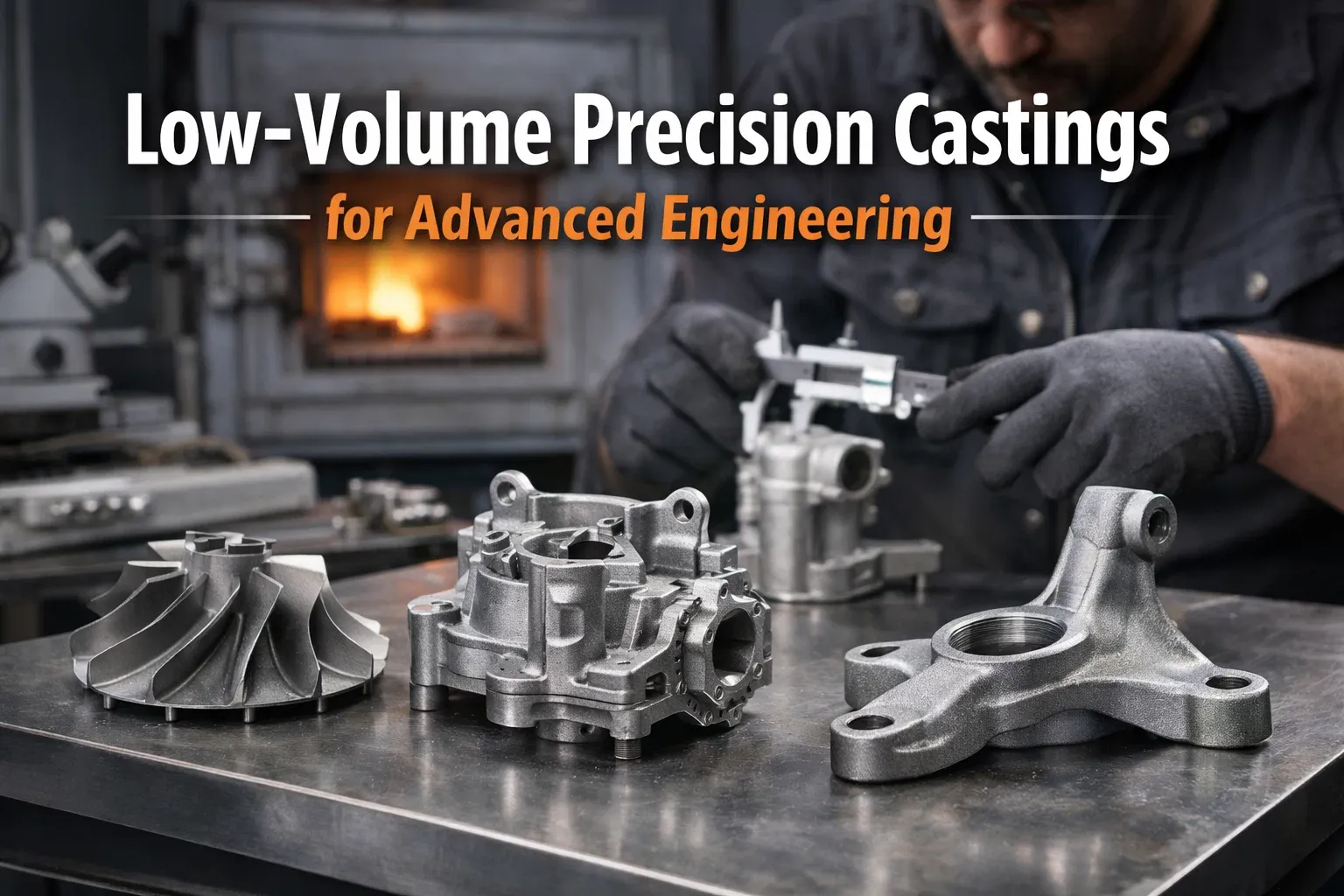
In today’s rapidly evolving industrial landscape, manufacturers are increasingly shifting toward flexible, efficient, and highly accurate production methods. Low-Volume Precision Castings have emerged as a powerful solution for advanced engineering sectors that demand exceptional dimensional accuracy, superior material integrity, and cost efficiency for limited production runs. Unlike mass manufacturing, low-volume casting focuses on quality, customization, and performance rather than sheer quantity.
Low-Volume Precision Castings play a vital role in industries such as aerospace, defense, automotive prototyping, energy, robotics, and heavy machinery. These sectors often require complex geometries, specialized alloys, and tight tolerances that traditional manufacturing methods struggle to achieve economically. By using precision casting techniques, manufacturers can produce near-net-shape components that significantly reduce machining time and material waste.
At Shubh Mangal Technocast, advanced casting expertise combines modern foundry practices with engineering precision to deliver consistent and reliable low-volume solutions. These castings support innovation, enable faster product development, and ensure superior performance even under extreme operating conditions.
What Are Low-Volume Precision Castings?
Low-Volume Precision Castings refer to the manufacturing of metal components in small batch quantities while maintaining high dimensional accuracy and surface finish. These castings are produced using advanced methods such as investment casting, precision sand casting, and shell molding, ensuring repeatability and performance consistency.
Unlike high-volume production, low-volume casting allows manufacturers to adapt designs quickly, test new concepts, and refine components without committing to expensive tooling or large inventory storage. This flexibility is particularly valuable for engineering teams working on prototypes, custom machinery, or specialized equipment.
In advanced engineering, Low-Volume Precision Castings offer unmatched control over metallurgy, mechanical properties, and geometric complexity. Engineers can specify custom alloy compositions, heat treatments, and finishing processes to meet exact application requirements.
Importance of Low-Volume Precision Castings in Advanced Engineering
Advanced engineering applications demand components that can withstand extreme temperatures, pressure, vibration, and corrosive environments. Low-Volume Precision Castings provide the structural integrity and reliability required for such demanding conditions.
Precision casting ensures minimal porosity, uniform grain structure, and accurate wall thickness. These characteristics are critical in applications where component failure can lead to costly downtime or safety risks. Low-volume production further enables customization, allowing engineers to fine-tune designs for optimal performance.
Industries relying on advanced engineering benefit from reduced lead times, faster prototyping cycles, and improved design validation. Low-Volume Precision Castings bridge the gap between concept development and full-scale production.
Key Industries Using Low-Volume Precision Castings
Aerospace and Defense Engineering
Aerospace components often require lightweight materials, complex internal structures, and extreme precision. Low-Volume Precision Castings allow aerospace engineers to manufacture turbine parts, housings, brackets, and structural components with exceptional accuracy and repeatability.
Automotive Prototyping and Performance Systems
In automotive engineering, low-volume casting supports prototype development, electric vehicle components, and performance-critical parts. Low-Volume Precision Castings enable rapid testing and iteration without the financial burden of mass tooling.
Energy and Power Generation
Power plants, renewable energy systems, and oil and gas equipment rely heavily on durable cast components. Low-Volume Precision Castings are used for valve bodies, pump housings, and heat-resistant components designed for harsh environments.
Industrial Machinery and Robotics
Robotics and automation systems require precise, lightweight, and durable components. Low-Volume Precision Castings provide excellent dimensional stability and mechanical performance, ensuring smooth operation and extended service life.
Materials Used in Low-Volume Precision Castings
Material selection is critical in precision casting. Low-Volume Precision Castings can be produced using a wide range of alloys tailored to specific engineering needs.
Carbon and Alloy Steels
Steel castings offer excellent strength, toughness, and wear resistance. They are commonly used in heavy machinery and structural components where load-bearing capability is essential.
Stainless Steel Alloys
Stainless steel Low-Volume Precision Castings provide corrosion resistance, thermal stability, and hygienic properties, making them ideal for chemical processing and medical equipment.
Heat-Resistant Alloys
Advanced engineering often requires components that perform reliably at high temperatures. Precision cast heat-resistant alloys maintain strength and stability in extreme conditions.
Specialty and Custom Alloys
Low-volume production enables experimentation with custom alloy compositions to meet unique performance requirements. This flexibility supports innovation and advanced engineering design.
Precision Casting Techniques for Low-Volume Production
Investment Casting
Investment casting is one of the most widely used methods for Low-Volume Precision Castings. It produces components with excellent surface finish and tight tolerances, reducing post-processing requirements.
Precision Sand Casting
Modern sand casting techniques offer improved accuracy and consistency. Precision sand casting is suitable for larger components and complex geometries.
Shell Molding
Shell molding delivers smooth surfaces and accurate dimensions, making it ideal for medium-sized low-volume components requiring repeatability.
Each technique is selected based on part complexity, material requirements, and production volume, ensuring optimal results for advanced engineering applications.
Design Advantages of Low-Volume Precision Castings
One of the most significant benefits of Low-Volume Precision Castings is design freedom. Engineers can incorporate complex internal channels, thin walls, and intricate features that would be difficult or impossible to machine.
Precision casting enables near-net-shape production, reducing material waste and machining costs. This efficiency is particularly valuable for expensive alloys and specialized materials.
Low-volume production also supports rapid design changes, allowing engineering teams to refine components without extensive retooling.
Quality Control and Engineering Accuracy
Quality assurance is a cornerstone of Low-Volume Precision Castings. Advanced inspection methods such as dimensional measurement, non-destructive testing, and metallurgical analysis ensure that every component meets strict engineering standards.
At Shubh Mangal Technocast, precision casting processes are monitored closely to maintain consistency, structural integrity, and dimensional accuracy. This commitment to quality ensures reliable performance in advanced engineering applications.
Cost Efficiency of Low-Volume Precision Castings
While low-volume production may appear more expensive per unit, Low-Volume Precision Castings often reduce overall project costs. Lower tooling investment, reduced machining, and faster development cycles contribute to significant savings.
For advanced engineering projects, cost efficiency is achieved through optimized material usage, minimized scrap, and shorter lead times. Precision casting delivers value by balancing quality and cost effectively.
Sustainability and Resource Optimization
Modern manufacturing emphasizes sustainability. Low-Volume Precision Castings support environmentally responsible practices by reducing material waste and energy consumption.
Precision processes ensure efficient metal usage, while low-volume production minimizes excess inventory and storage requirements. These factors contribute to a more sustainable engineering workflow.
Why Choose Shubh Mangal Technocast for Low-Volume Precision Castings
Shubh Mangal Technocast specializes in delivering high-quality Low-Volume Precision Castings for advanced engineering applications. With deep metallurgical expertise, advanced foundry technology, and a customer-focused approach, the company ensures reliable and consistent results.
By combining precision engineering with flexible production capabilities, Shubh Mangal Technocast supports innovation across multiple industries. Learn more about their casting solutions by visiting.
Role of Low-Volume Precision Castings in Advanced Engineering Projects
In complex engineering environments, precision, adaptability, and performance are non-negotiable. Low-Volume Precision Castings play a critical role in bridging innovation and production by enabling manufacturers to produce highly specialized components without the limitations of mass manufacturing.
Advanced engineering projects often involve evolving designs, stringent testing cycles, and unique operating conditions. Low-volume casting allows engineers to implement design modifications quickly while maintaining metallurgical consistency and dimensional accuracy. This adaptability accelerates development timelines and reduces project risk.
By supporting rapid iteration and customization, Low-Volume Precision Castings empower engineers to refine components for efficiency, durability, and performance before scaling production if required.
Complex Geometry and Design Flexibility
One of the most compelling advantages of Low-Volume Precision Castings is the ability to manufacture complex geometries with minimal constraints. Traditional machining methods often struggle with intricate internal cavities, undercuts, and thin-wall sections.
Precision casting enables engineers to integrate multiple features into a single component, reducing assembly complexity and potential failure points. This design flexibility is especially valuable in advanced engineering fields such as aerospace, robotics, and energy systems.
Complex shapes can be produced with consistent accuracy, ensuring repeatability across small production batches. This capability allows manufacturers to achieve superior functional performance while maintaining tight tolerances.
Integration with Advanced Machining Processes
While Low-Volume Precision Castings often produce near-net-shape components, advanced machining processes are sometimes required for critical surfaces and interfaces. CNC machining, grinding, and drilling are commonly integrated to achieve exact specifications.
The precision achieved during casting significantly reduces machining time and tool wear. This efficiency translates into lower costs and faster turnaround times, particularly for high-value engineering components.
By combining precision casting with modern machining techniques, manufacturers can achieve exceptional accuracy without compromising structural integrity.
Heat Treatment and Metallurgical Enhancement
Heat treatment is a vital step in optimizing the mechanical properties of Low-Volume Precision Castings. Processes such as annealing, normalizing, quenching, and tempering enhance strength, toughness, and wear resistance.
Advanced engineering applications often require components that can withstand cyclic loads, extreme temperatures, and corrosive environments. Heat treatment ensures consistent performance by refining grain structure and improving material homogeneity.
Custom heat treatment cycles can be tailored to specific alloys, ensuring that each casting meets the exact performance requirements of its application.
Surface Finishing and Performance Optimization
Surface finishing plays a crucial role in enhancing the functionality and aesthetics of Low-Volume Precision Castings. Finishing processes include shot blasting, polishing, coating, and surface hardening.
These treatments improve corrosion resistance, reduce friction, and enhance fatigue life. In advanced engineering, surface quality often directly impacts performance, particularly in moving or load-bearing components.
Precision casting minimizes surface defects, reducing the need for extensive finishing and ensuring consistent results across production batches.
Quality Assurance and Inspection Standards
Quality assurance is integral to the success of Low-Volume Precision Castings. Advanced inspection techniques ensure that each component meets engineering specifications and industry standards.
Dimensional Inspection
Coordinate measuring machines (CMM) verify dimensional accuracy and geometric consistency.
Non-Destructive Testing
Methods such as radiographic testing, ultrasonic inspection, and dye penetrant testing detect internal and surface defects without damaging components.
Metallurgical Analysis
Microstructural evaluation confirms alloy composition, grain structure, and heat treatment effectiveness.
These rigorous quality measures ensure reliability and repeatability in advanced engineering applications.
Case Applications of Low-Volume Precision Castings
Aerospace Structural Components
Precision cast brackets, housings, and support structures deliver strength and weight optimization.
Energy Sector Equipment
Valve bodies, turbine components, and heat-resistant parts benefit from precision metallurgy.
Industrial Automation Systems
Robotics and automation equipment rely on precision cast components for accuracy and durability.
Custom Machinery Development
Low-volume casting supports the development of specialized machines and tools with unique design requirements.
These applications highlight the versatility and importance of Low-Volume Precision Castings in modern engineering.
Cost Control and Project Efficiency
Contrary to common assumptions, Low-Volume Precision Castings can be highly cost-effective. Reduced tooling investment, minimal material waste, and lower machining requirements contribute to overall savings.
For advanced engineering projects, the ability to avoid high upfront tooling costs is particularly beneficial. Low-volume production allows manufacturers to allocate resources efficiently while maintaining high quality.
Precision casting also reduces lead times, enabling faster product launches and improved time-to-market.
Sustainability and Environmental Responsibility
Sustainability is increasingly important in manufacturing. Low-Volume Precision Castings support environmentally responsible practices by optimizing material usage and minimizing scrap.
Precision processes reduce energy consumption and waste generation. Additionally, the ability to recycle metal alloys further enhances sustainability.
By aligning manufacturing practices with environmental goals, precision casting supports responsible engineering innovation.
Digital Engineering and Simulation in Precision Casting
Modern Low-Volume Precision Castings benefit from digital simulation and modeling technologies. Casting simulation software predicts metal flow, solidification patterns, and potential defects before production begins.
This predictive approach reduces trial-and-error, improves yield rates, and enhances casting quality. Engineers can optimize designs virtually, saving time and resources.
Digital integration ensures consistency and reliability across low-volume production runs.
Challenges and Solutions in Low-Volume Precision Castings
Challenge: Maintaining Consistency
Small batch production can introduce variability if not managed carefully.
Solution: Advanced process control and standardized procedures ensure repeatable quality.
Challenge: Alloy Customization
Special alloys require precise control and expertise.
Solution: Experienced metallurgical teams manage alloy composition and treatment effectively.
Challenge: Cost Management
Low volumes may increase per-unit costs.
Solution: Precision casting reduces secondary operations and optimizes material usage.
These solutions demonstrate how Low-Volume Precision Castings remain efficient and reliable.
Why Shubh Mangal Technocast Excels in Low-Volume Precision Castings
Shubh Mangal Technocast brings extensive experience and technical expertise to every project. By focusing on quality, customization, and engineering collaboration, the company delivers reliable Low-Volume Precision Castings for demanding applications.
From material selection to final inspection, each stage is handled with precision and accountability. This commitment ensures consistent performance and long-term customer satisfaction.
To explore advanced casting capabilities and engineering solutions, visit https://shubhmangaltechno.com/.
Future Outlook of Low-Volume Precision Castings
As industries continue to prioritize innovation and flexibility, Low-Volume Precision Castings will become increasingly important. Emerging technologies such as additive manufacturing integration, advanced alloys, and AI-driven process optimization will further enhance precision casting capabilities.
Advanced engineering projects will continue to rely on low-volume solutions to accelerate development, reduce risk, and achieve superior performance.